About Belarus
Articles dedicated to Belarus history, Belarus politics, Belarus economy, Belarus culture and other issues and Belarus tourist destinations.Kobrin, Belarus
Kobrin or as the locals prefer to call it Kobryn’ is a district center in Brest region and a harbor on the Mukhavets River. Located only 52 km away from Brest it is just next to the Minsk-Brest highway and it also has a train station on Brest-Gomel railroad.
According to a local legend, the town was founded on the island next to which the Kobrinka River joins the Mukhavets. Kobrin was first mentioned in the chronicles in 1287 as a private property of a Volyn prince. In the early 14th century Kobrin became a part of the Grand Duchy of Lithuania whereupon the castles were built in the city.
Kobrin became the center of its own principality in around 1404 and its autonomy was in place for a century. In the early 16th century it was cancelled and Kobrin became just a country center that reported to the Polish king. Later on it frequently changed owners and since 1532 was owned by Bona Sforza – the Queen of Poland and the wife of Sigizmund I The Old. Later on it belonged to different members of the royal family.
The revision lists of Kobrin made up in 1563 mention 377 households. In 1589 Kobrin received the Magdeburg right which it enjoyed until 1766. The right enabled residents to have the coat of arms and the town hall. The benefits of this liberty were the reason of the town’s economic boom. For instance, two annual fairs were established immediately and were held in January and September followed by two more a century later. For the locals a fair was an event that was recalled for years afterwards. Merchandise ranged from pottery supplied from Pruzhany area to barrels, baskets, straw-made vessels and other household items from around the area. All the four fairs were in place until the grave destruction of WWI in 1915.
Kobrin economic district existed in the 16-18 cc. and its income was used to support the royal court. The district also included Pruzhany, Gorodets and several other areas. In the early 18th century Kobrin and Brest economic districts merged into one.
In the mid-17th century the town’s population was about 1700 people who resided in around 500 dwelling houses. The uprising of Bogdan Khmelnitsky in Ukraine in 1648 and the Swedish invasion of the early 1700s badly damaged the city. As a result its status was lowered to that of a village and the Magdeburg right was rescinded.
In the second half of the 18th century Kobrin was rebuilt. Mukhavets Canal passed through the town connecting the Visla and the Dnieper rivers. During the national uprising of 1794 the Russian army under the command of Alexander Suvorov entered Kobrin. After the uprising had been suppressed Suvorov became the local landlord. On his orders the old defenses of Kobrin were flattened. From 1795 and on Kobrin belonged to Slonim, then to Lithuanian and finally – to Grodno Gubernia (region).
At the turn of the 18-19 cc. Kobrin had the town hall, the Savior Monastery, the churches of Exaltation, Sts. Peter and Paul and St. Nicholas. The Russian army engaged the French next to the town in 1812. The French invasion affected the city badly. However, as the canal was restored in the 1830s (renamed into Dneper-and-Bug Canal) and the construction of Moscow-Warsaw road was complete (1846) the economy was revived. 1882 saw the construction of the town’s train station – a part of the Polesye railroad.
The census of 1897 revealed 10355 residents in Kobrin. There were 30 enterprises employing about 150 persons, several dozen mills, several brick and leather factories, 2 breweries, under 200 smaller shops and 2 hospitals.
In the early 20th century the merchants established a trade center that housed about a hundred shops of different specialization. Apart from that most of the houses that outlined Market Square accommodated shops, too.
A few more pictures from our little ancestry tour to Kobrin :) With kind permission of Mr. and Mrs. Kaiman, from sunny Florida...
Posted by Minsk Guide on Saturday, 13 June 2015
The German occupation engulfed the town in 1915 followed by the Polish one in 1921. The Soviet power was introduced quite briefly during the Soviet-Polish war in 1920 and wasn’t restored until 1939.
The Polish administration introduced monthly fairs that attracted cattle dealers from Warsaw, Lodz and other industrial centers. The hotel keepers of Kobrin profited immensely. Horse breeding was a steady income source for the local peasants and became such a big deal that the buyers - mostly cavalry officers from Western Europe (and of course, local Gypsies) – came in good numbers.
Out of 12 000 prewar Kobrin residents about 500 were entrepreneurs of different kind. About the same number of vendors operated in the province, with small businesses dominating the market. There were multiple craftsmen and professionals like bakers, boot makers, tailors and tin smiths who produced mass products and special items.
It is easy to imagine the degree of competition in some highly profitable spheres which was the reason to frequent bankruptcy cases. It was worth seeing a merchant inviting a customer to have a look offering discounts. Solid businessmen quoted a price that never changed, smaller dealers allowed some haggling. Twice a year unsold items would be sold with terrific discounts.
During the Nazi occupation in the Great Patriotic War 6900 local residents - a great deal of them being Kobrin Jews – were exterminated.
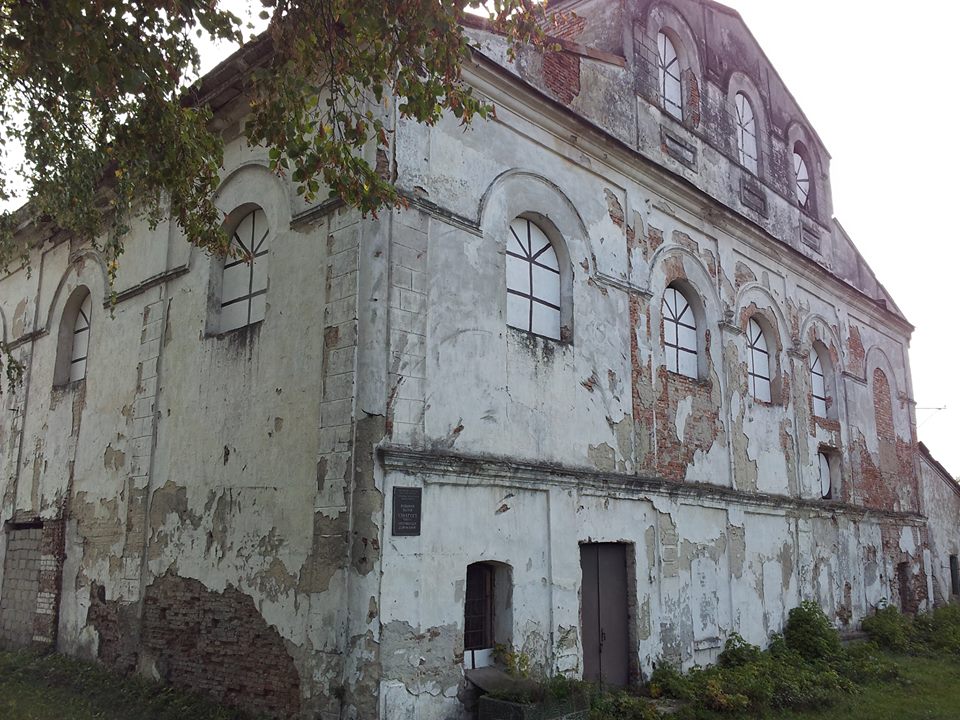
The surviving Kobrin synagogue
The Jewish community of Kobrin
The Jewish Kobrin community was first mentioned in writing in 1514 in a privilege certificate granted by King Sigizmund the Old. The paper confirmed the previously granted rights of the community. In 1563 Jews of Kobrin owned 25 houses, a synagogue and about 20 fruit orchards. They were mostly engaged in trade, brewing and tax collection.
It appears that the Jews of Kobrin recovered from the mid-17th century quite swiftly – the paid rather solid taxes in the early 1700s. The following events were not conducive to the community economic development. While poorer Jews were busy with door-to-door sales and practiced crafts, their more well-off compatriots dealt in timber, wheat and salt.
In 1766 Kobrin Jewish community numbered over 900 taxpayers including those from the nearby area. That figure increased to 8840 by 1847 with half of them based in Kobrin. 1897 census revealed 25 349 Jews in the Kobrin district (uezd) including 6 738 in the city (64.8 per cent of Kobrin population). Jewish rent in the pale of settlement was banned in 1882 followed by the introduction of the state monopoly for brewing. These occasions heavily damaged the welfare of Kobrin Jews and many of them, in the first line craftsmen, started leaving for the USA.
In the 1920s the Jews made up 66 per cent of the town’s population mostly engaged in weaving, construction and trade. A Tarbut school with Hebrew as tuition language was built in Kobrin at that time, also several kheders and a Yiddish school. Betsalel ben Shlomo from Kobrin, the head of the town Jewish community and Rabbi Yakov ben David Shapira, the founder of the city yeshiva, were prominent spiritual leaders.
The Nazi occupation came on 23 June 1941. Almost all the Jewish population turned out to be on the occupied territory. Ghettos A (specialists) and B (dependents) were soon established with the population of the latter executed next month near Bronnaya Gora forest. In October 1942 all inmates of the A ghetto (over 4000 people) were convoyed out of the town to Khizry village and executed next to the prearranged pits. Only a hundred managed to flee on the eve of the execution to join a partisan team. The Shoah survivors of Kobrin left Belarus for Poland according to the Polish-Soviet Treaty of 1945 and then departed to Israel. A few Jews lived in Kobrin in the 1970s and 1980s while today there is none left.
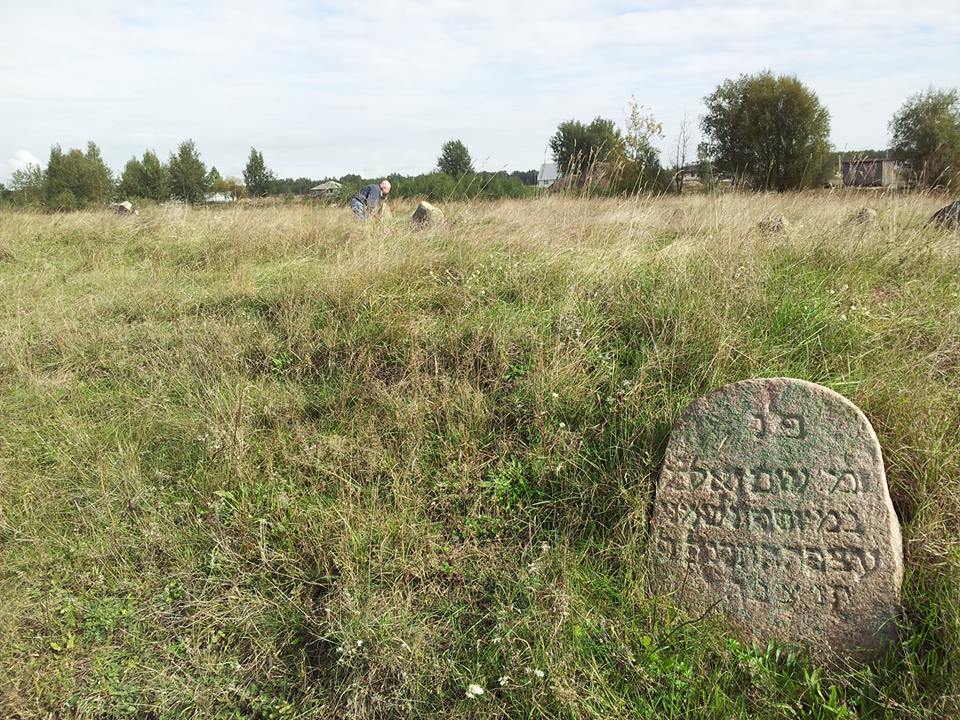
Kobrin Jewish cemetery
Kobrin synagogue is the monument of eclectics architecture. It was built of bricks presumably in the 19th century. The building is symmetrical and even today its size is impressive. In the Soviet times the synagogue was used as a workshop of alcohol-free drinks.
The city was rebuilt after the war and its population steadily grew over decades. In 1970 it reached about 25 000 people while by 2002 it had almost doubled. Kobrin today makes an impression of a well-doing city with about a dozen enterprises that no doubt keep the population away from immigration plans in the near future.
If you would like to take a Kobrin city tour or to trace your Kobrin family roots, don't hesitate to contact me.
Driving in Kobrin
|
|
Questions are welcome!


Featured
Applying at their local Belarus Consulate, the citizens of migration-secure states (e.g. the USA, Canada, Japan and others) can obtain a short-term...
The form of application for a visa to Belarus has become digital and you can save and send it as a PDF file. It is only a 2-page document that is available...
Quite a number of things, as a matter of fact. Let’s examine a typical case from my travel agent’s past with a traveler landing in Minsk Airport (MSQ) and applying for a visa...
People, who want to travel to Belarus to see a friend, take care of the grave of a relative, take part in the court hearings, etc. need to apply for a private visa...
This article covers field family research in Belarus that in most cases comes after dealing with the State archives of Belarus and genealogical research.
A plastic card is a fine thing, no doubt, but there have been a number of cases when the ATM displayed ERROR, or required a PIN code...
While most tourists agree that Belarus is not the country for grand shopping, there are still some things that can be brought back as souvenirs...